
Memory foam is one of the most recognisable mattress materials, but a lot of buyers can't actually explain what makes it different from regular foam. Here's a straightforward answer.
The science, briefly
Memory foam is a viscoelastic polyurethane foam — "visco" meaning slow-moving, "elastic" meaning it returns to shape. It softens where your body heat warms it, gradually moulding to your shape, then springs back over several seconds once you move. That slow recovery, sometimes called hysteresis, is what creates the familiar body-shaped impression.
Where it came from
Memory foam was originally developed for aircraft cushioning in the 1960s to absorb g-force impact, entered public use in the 1980s, and reached mattresses commercially in the early 1990s. It's since become one of the most common comfort-layer materials worldwide.
Not all memory foam is the same
- Traditional memory foam — dense, slow-responding, excellent contouring, but can retain heat without airflow
- Open-cell memory foam — a modified structure that allows more airflow while keeping the contouring benefit
- Gel-infused memory foam — gel beads help absorb and disperse body heat
Why density matters
Density (kg/m³) is the single biggest indicator of quality and lifespan. Foam below 40 kg/m³ tends to soften within a few years; 40–60 kg/m³ offers a good balance of support and durability; above 60 kg/m³ is firmer, more premium, and typically lasts the longest.
The upside
Excellent pressure relief, strong motion isolation (a real plus for couples), hypoallergenic properties that discourage dust mites, and silent operation with no springs to creak.
The trade-offs
Heat retention is the main one in Indian conditions, especially in rooms without AC. New mattresses can also carry a faint odour for the first day or two — this fades with airing and isn't a sign of a problem.
Who it suits
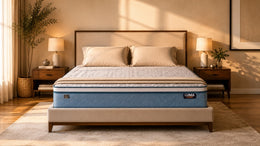
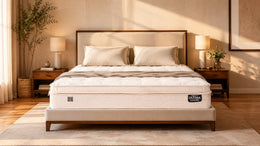
Side sleepers, anyone dealing with joint or pressure-point pain, light sleepers who wake easily from a partner's movement, and bedrooms with reliable air conditioning. If you're a hot sleeper without AC, or you sleep mostly on your stomach, it's worth comparing against a hybrid or HR foam build like Luma or Resto instead.
Wondering which mattress suits you?
Compare the Foamico ranges and find the feel that matches how you sleep.
Explore Mattresses

