
HR foam turns up in more Indian mattresses than any other single material, but the term itself is often misused. Here's what it actually means, and the one number that separates genuine HR foam from foam that's just labelled that way.
What "high resilience" actually means
HR foam is a specialised polyurethane foam engineered with a rubber-compound additive and an open-cell structure, giving it an instant, spring-like bounce-back rather than the slow recovery of memory foam. Press it and it pushes back immediately.
The number that actually matters
Density (typically 30–60 kg/m³) tells you part of the story, but the real differentiator is the Support Factor (also called Compression Modulus) — genuine HR foam needs a Support Factor of 2.4 or higher. A lot of foam gets marketed as "HR" without meeting this threshold, so it's worth asking the manufacturer for the number in writing.
Why it's so popular in India specifically
- Climate — the open-cell structure breathes well in heat and humidity, unlike dense closed-cell foam
- Long ownership cycles — Indian households often keep a mattress 10–15 years, and HR foam resists permanent compression better than standard foam over that time
- Firmness preference — HR foam provides a firm, orthopedic-style feel without being genuinely hard
- Value — near-latex performance at a noticeably lower price
Benefits
Even weight distribution, strong durability (8–12 years with normal use), good airflow, instant responsiveness for repositioning, decent motion isolation, and it works well as either a support core or a comfort layer.
Drawbacks
Less body-hugging contour than memory foam, so it may not suit people chasing deep pressure relief in the shoulders specifically. New foam can carry a faint smell for a day or two after unboxing, which fades with airing.
Where you'll find it in our lineup
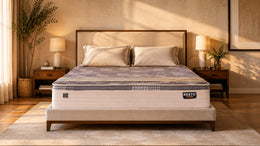
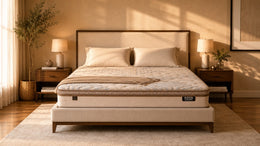
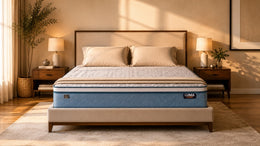
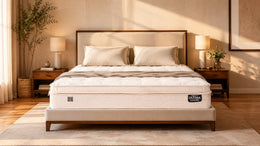
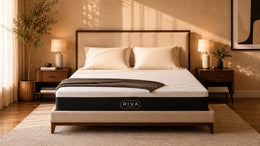
HR foam forms the support core in both Resto (Enduro HR Foam) and parts of the Sova stack, precisely because it holds its shape for years under daily use while still breathing well in Indian bedrooms.
Wondering which mattress suits you?
Compare the Foamico ranges and find the feel that matches how you sleep.
Explore Mattresses